
62: Navigating Disruption: Why Supply Chain Leadership Must Change
EPISODE 62
About This Episode
Global supply chains have never been faster, more complex, or more fragile. In this episode, Pete Behrens examines the widening gap between the technology powering today's supply chains and the leadership required to manage them — and why that gap has become the real bottleneck. Drawing on firsthand experience with senior supply chain leaders around the world, Pete introduces three critical leadership shifts that separate leaders who merely react to disruption from those who build organizations capable of navigating it, and shares what it looks like when an organization commits to making that change.

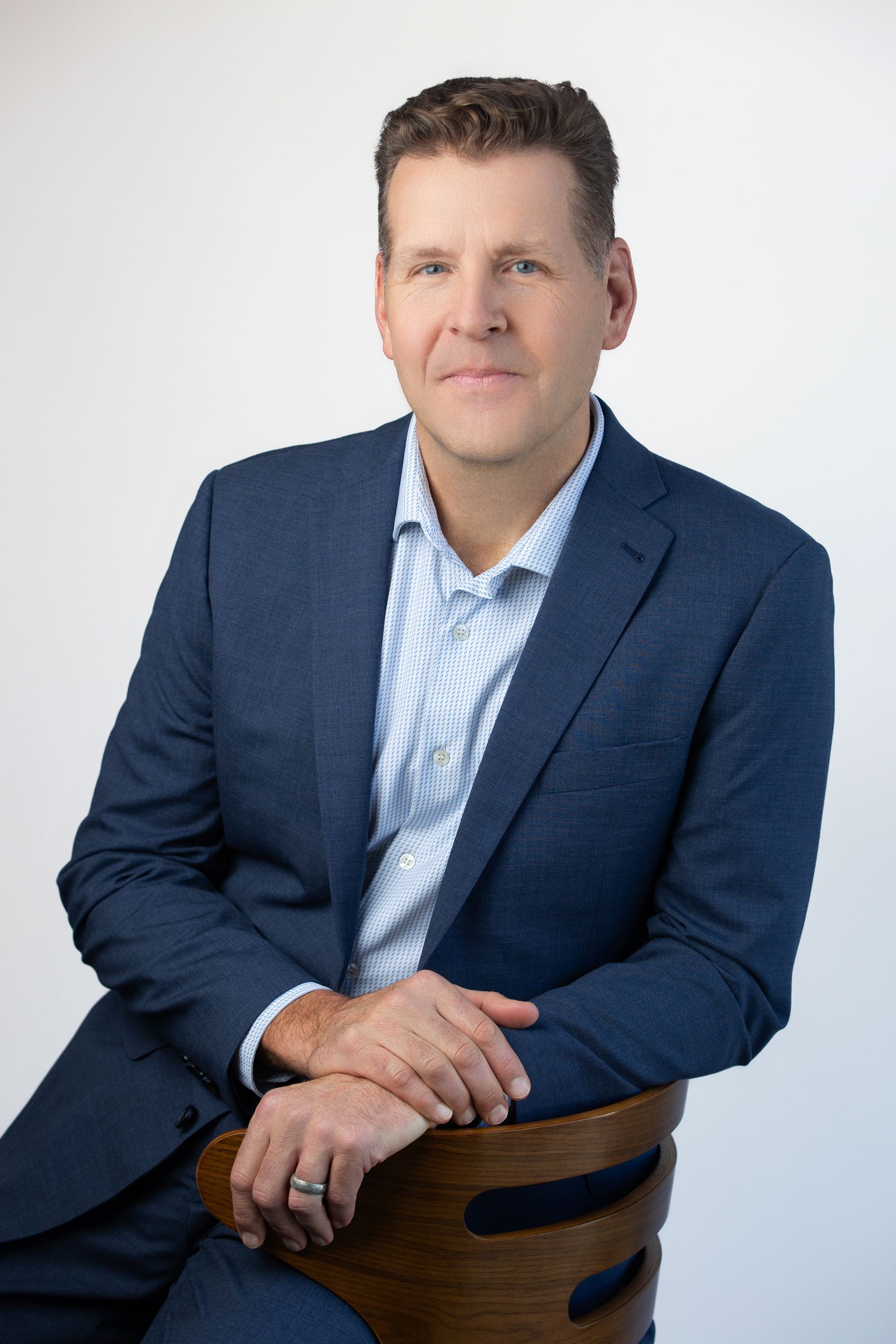
Pete Behrens
Founder & CEO, Agile Leadership Journey
Pete Behrens is the host of the Relearning Leadership podcast, author of Into the Fog: Leadership Stories from the Edge of Uncertainty, a sought-after keynote speaker, and Founder/CEO of Agile Leadership Journey. With over three decades of guiding leaders through uncertainty, he has worked with Fortune 500 companies, including Salesforce, GE Healthcare, Google, and the Federal Reserve Bank of New York, impacting 15,000+ leaders worldwide.
Pete's journey from engineer to CEO to coach revealed a fundamental truth: the most complex challenges aren't technical—they're human. This insight shaped both his personal approach and the foundation of Agile Leadership Journey, which transforms organizations by developing leaders equipped to navigate complexity and change.
Relearning from This Episode
The Real Bottleneck in Your Supply Chain Isn't Technology
Billions have been invested in making supply chains faster and more intelligent. But as technology accelerates, the leaders managing it are being left behind — still operating with mindsets built for a slower, more predictable world. Closing that gap is the leadership challenge of this moment.
Disruption Requires a Different Kind of Leader
When all plans fail — and in a disrupted world, they will — top-down, command-and-control leadership is too slow to respond. The leaders who are making a difference are those who have learned to develop others, enable decisions closest to the work, and build organizations that absorb disruption rather than buckle under it.
Catalyst Leadership Is a Cultural Shift, Not a Training Event
The most forward-thinking supply chain organizations have recognized a fundamental shift: effective leaders need to be flexible, adaptable, and resilient — and building that capability requires ongoing cultural change, not a series of training events. Organizations that have made this commitment are seeing it show up in hundreds of documented positive impacts across their people, their operations, and their business results.
Investment in People Must Match Investment in Technology
Organizations that pour resources into digital capability while underinvesting in leadership development are building a faster engine with a less capable driver. The organizations getting this right treat leadership development as a strategic imperative, not an afterthought.
Explore Recent Episodes
Episode Transcript
Pete Behrens:
Welcome to the Relearning Leadership podcast.
I'm your host, Pete Behrens.
I’ve been thinking a lot lately about the compression of time—
how it squeezes us as individuals and as leaders.
Nowhere is that pressure more visible than in our global supply chain.
As customers, we’ve come to expect next day, or more likely same-day, delivery.
But have you ever stopped to wonder about the engine that makes that possible?
In today’s episode, I’d like to lift up the hood, and peek inside at that engine,
to help shed some light on the toll it takes to keep it running.
Supply Chain is not only managing the logistics from your website order to your delivery at home.
It also manages the innovative design and manufacturing process,
regulatory and compliance governance,
the sourcing and supply of materials,
and the warehousing and staging.
It’s a digital matrix.
A technology marvel.
High-def monitors,
automated movers,
and AI systems analyzing, tracking and predicting every movement
and every delay.
All tuned to make the next delivery more efficient than the last.
Just how efficient?
Only a decade ago, we were impressed with two-day shipping.
Then, next day.
Today, same day.
But it doesn’t stop there.
The last time I visited India,
I was the fortunate dinner guest of my colleague Rashmi Fernandes.
She treated me to a beautifully home-cooked Indian meal,
where I got a chance to meet and dine with her family.
Both the meal, and her family, were a gift to me.
OK. Why am I sharing my visit to India?
Well, little did I know, but Rashmi was out of an ingredient she needed for dinner.
But rather than running down to the market to get it,
she ordered it.
And it arrived at her door in 10-minutes!
With no delay to our dinner.
This is a rapidly growing industry called Quick Commerce, or q-commerce: 10-minute delivery!
Groceries, snacks, household items — ordered on your phone and delivered to your door in a blink.
As a dinner guest, and to my host, it helped to shape a beautiful meal.
However, as we discussed after dinner, it’s a problem.
In fact, my visit to India that week was to visit with a senior leadership team of one of our supply chain clients.
I’ve spent the past few years with senior supply chain leaders all around the world.
And for decades, they’ve been rewarded for a very specific kind of excellence: operational mastery.
Leaders are trained and rewarded to optimize speed and cost.
Reduce variance,
drive efficiency,
and increase predictability.
And technology has been there, at every step, to help them achieve this.
Billions of dollars have been spent on making supply chains faster and more intelligent.
But here’s the problem.
Technology is advancing faster than leadership that manages it.
And what many organizations are discovering is that the real bottleneck isn’t the supply chain engine itself. It’s the people responsible for operating it.
Amid this technical symphony you’ll find people at every stage. Planning, designing, moving, measuring and managing. Supply chains are, ultimately, built and managed by people
And so, as each part of the engine undergoes technology evolution
it’s creating a digital divide, indeed a gap, to the people required to run it.
The World Economic Forum estimates more than 10 million manufacturing positions are currently unfilled globally —
driven largely by the demand for digital skills that the current workforce hasn't yet developed.
That's not a recruiting problem, that’s a leadership problem.
Furthermore, as each link of the chain is dialed up to 10, it’s stretching the workforce to it’s breaking point.
Negative impacts on worker safety and respect are well documented,
from the warehouses at Amazon
to the streets of Bangalore, where our courier rushed our missing dinner ingredient that night.
And it’s not only the factory floor workers.
The leaders are under just as much, or more, pressure.
They too are tired,
exhausted,
and feeling that the entire system has become a blur:
too fast,
too interconnected,
and too unpredictable.
And customer demand is only one side of this equation.
There’s an equally challenging supply side.
Geopolitical disruptions and wars.
Tariff pivots.
Increasing climate events.
And a global competitive landscape that has removed all regional barriers to entry.
Foreign factories from halfway around the world are now on their customers’ doorstep.
So while customer expectations are growing, the disruptions to meeting those expectations are also growing.
And supply chain leaders are pinched between them.
They no longer feel they’re out front.
They’re behind, and racing just to keep up.
One company who saw this trend early is Schneider Electric.
Their supply chain spans more than 160 factories and more than 80 thousand people worldwide.
They too have, and continue to, invest heavily in digital capability —
dashboards, robotics, and AI.
They too have become extremely good at driving performance.
Execution, speed, and efficiency.
And they too have been experiencing this gap between technology and their people.
Schneider’s Chief Supply Chain Officer, Mourad Tamoud,
recognized the shift in leadership required to meet this moment.
In a 2025 LinkedIn Pulse Report, he said, and I quote, “In today's supply chain environment, effective leaders need to be flexible, adaptable, and resilient…”
Notice the shift in his language.
He’s not emphasizing operational efficiency.
Nor reducing cost and time.
Although those are still critical.
He’s pointing to flexibility.
Adaptability.
Resiliency.
Why?
Because in a disrupted world, all plans fail.
And top-down leadership is too bureaucratic and slow.
In its place, innovation, collaboration and responsiveness rise to the top.
In fact, three years ago, Schneider Electric held up a mirror and realized that while their technology was futuristic,
their leadership was stuck in the past—
still operating in a "command-and-control" mode that worked well enough when time wasn’t so compressed but now had become their bottleneck.
Now, it’s one thing to say it.
It’s another altogether to do something about it.
Schneider Electric put money on the table and invested in a multi-year Catalyst Leadership program to prepare leaders for this moment.
Tamoud said it well in that same Pulse Report, “Our Catalyst Leadership program is in fact an ongoing cultural change effort rather than a series of training events.”
So, what exactly is catalyst leadership?
And how is it helping address this gap?
To simplify complex human behavior is risky,
but let me try by sharing just three leadership shifts.
Shift #1: From Directing to Developing.
Most leaders direct and coordinate work.
That’s management 101.
Driving task performance to achieve organizational goals.
In a more stable business world, this is often enough.
Yet, in a dynamic and disruptive world? It’s not.
Catalyst leaders take this a step further.
They don’t presume stability.
And they’re not just focused on today’s performance and goals.
They’re seeking to position the organization to address the inevitable disruption to those goals.
This means investing in their own personal growth and the growth of the people around them.
It’s a shift of priorities and focus.
You’ll find catalyst leaders asking more questions than giving answers.
Coaching more than correcting.
In a complex supply chain, this enormously critical—the pace of change means leaders cannot possibly stay on top of every domain.
They depend on others to solve challenging problems together, without requiring direction from above.
This means catalyst leaders live at every level of the organization.
Shift #2: From Controlling to Enabling.
Traditional supply chain leadership has often relied on a clear hierarchy with tight delegation.
Controlling through structure, process and oversight.
That’s how consistency and efficiency are achieved.
Again, in predictable environments, this works.
But as variability increases, control breaks down.
Catalyst leaders gain more control by distributing it.
They don’t remove structure—they redefine it.
Instead of controlling decisions, they create the conditions for better decisions to happen without them.
This means setting clear intent, aligning priorities, and establishing guardrails—
then trusting teams closest to the work to act.
The speed of problem solving and decision making must match the speed of technology.
Shift 3: From Reacting to Resiliency.
Leaders are often rewarded for saving the day.
Playing the hero in stepping in when something breaks.
Yet, this signals a lack of foresight.
Catalyst leaders shift their time perspective towards the horizon.
This means building systems that surface issues sooner.
Which means creating environments where issues are raised without hesitation.
That requires safety. Not physical safety, psychological safety.
Safety to contribute new ideas, and indeed to challenge authority when necessary.
In a complex supply chain, disruptions are inevitable.
Resiliency doesn’t come from avoiding them,
but from building an organizational muscle to respond, adapt, and improve from them.
Again and again.
In a nutshell?
Catalyst leadership is flexible, adaptable, and resilient.
Just as Tamoud stated.
OK. Nice theory, show me the numbers.
Just as I was visiting India, a fire at one of our client’s supplier plants disrupted a critical component.
And in the U.S., a port strike created a similar challenge.
In both cases, catalyst leadership showed up through rapid cross-functional collaboration,
creative contingency planning,
and fast action to minimize business impact.
And these are just two of more than 400 positive impacts of catalyst leadership that one of our clients experienced in a single year.
How do we know this? We ask. Employees from around the world share examples of how catalyst leadership is positively impacting their people, their plants, and their business.
Unfortunately, catalyst leadership is rare.
Bill Joiner’s research, and confirmed by our in-the-field data,
indicates that only 10% of leaders operate predominantly in a catalyst mindset.
The rest remain behind, operating in a mindset suitable for an older, slower, and more stable time.
Schneider Electric, along with other clients we engage with, are seeking to change these metrics.
In our next episode, we will hear from Paul Stonehouse,
one of the difference makers at Schneider Electric.
He shares some incredibly candid—and funny—stories about the reality of shaping a global culture. Including metaphors about ocean reefs and electric fences. You’ll want to listen.
What can we take away from this?
First, complexity isn't your enemy—
it’s your environment.
So, stop trying to eliminate complexity
and start building an organization capable of navigating it.
Second, success is equal parts technology and leadership.
Investment in your people must match investment in your technology.
And finally, a reminder that a transformation of this magnitude doesn’t come from a single event or initiative.
It requires ongoing investment,
something we call "marginal gains"—
dozens of micro shifts in how we talk,
how we measure,
and how we show up for our teams,
All compounded over time.
So, the next time you order that same-day delivery,
Share some gratitude.
Not only for the technology that makes it possible,
But the people as well.
And, if you’re feeling exhausted by your high-performing engine,
Know this.
There is a path forward.
A journey to navigate this Fog.
Thank you for listening.
I’m Pete Behrens.
Relearning Leadership is the official podcast of the Agile Leadership Journey. To learn more, visit relearningleadership.show.