When the Slowest Part of Your Organization Isn't a Person — It's a Process
ARTICLE HIGHLIGHTS
Most leaders have felt the tension between protecting the organization and keeping it moving. Compliance requirements — regulatory, legal, contractual — exist for good reason and aren't going away. The question is whether the systems built to manage them are helping the organization deliver or quietly working against it. This piece examines why procurement becomes a bottleneck even when everyone involved is doing their job, what it costs when that tension goes unmanaged, and what leaders who have made real progress here are actually doing differently.
A business sponsor — someone who fought to bring a new partner on board and needs them working as soon as possible — opens the relationship with an apology.
"I want you to know upfront that our procurement process is going to be long and complicated. We really appreciate your patience."
This happens before a single document has been submitted.
That sponsor isn't failing. They're doing something harder — being honest about a system they can't control and can't fully fix. They've learned that warning people upfront is the best they can do.
Henriette Kamfer, a Procurement Specialist at Australia's largest natural gas infrastructure company, described what tends to follow:
"If you have an hourglass, that little space in the middle where the sand goes through, that's where we are. This information just slowly trickles through between the parties."
The hourglass isn't broken. It's working exactly as designed. That's what makes this a leadership problem.
Why Procurement Becomes a Bottleneck (Even When Everyone Is Doing Their Job)
It would be easy to point fingers at procurement teams. But that misses what's actually happening. Procurement functions were designed, often decades ago, around very reasonable assumptions: control costs, manage risk, ensure compliance, and protect the organization. Those goals haven't gone away. The problem is that the operating model built to achieve those goals doesn't fit well alongside teams expected to move in weeks rather than months.
Delivery teams feel blocked. Procurement teams feel blamed for doing exactly what they were set up to do. Both are right, and neither can fix it alone.
The friction is structural, not personal.
There's also something underneath the structure that's worth calling out: the incentives are asymmetric. Nobody gets fired for adding a compliance check. Nobody faces consequences for a vendor relationship that took eight months to formalize. But the leader who streamlines the process and something goes wrong? That's a different conversation. The system accumulates caution because caution is individually rational, even when it's organizationally costly. Understanding that is the first step toward changing it.
Many organizations have responded to the bottleneck by adding more procurement resources — more people, more process, more review layers. But scaling a function that wasn't designed for speed doesn't make it faster. It makes it more complex.

When Procurement Gets Outsourced — and Disconnected
Outsourcing parts of the procurement process is itself a compliance-over-momentum decision. It transfers risk and reduces internal liability — reasonable goals — but it also transfers context. And context is what makes any given vendor relationship urgent, strategic, or time-sensitive.
Third-party procurement managers apply standardized processes across a broad portfolio of clients and vendors, which is exactly what makes them scalable and cost-effective. That same standardization means they operate at arm's length from the business. They are optimizing for thoroughness and compliance, not for the business outcome the process is meant to serve. They don't know which vendor relationship is blocking an AI pilot, which supplier has been waiting six months while a team works around their absence, or which sponsor has been apologizing since the first conversation.
For vendors and suppliers navigating these systems, the experience reinforces the problem. The people who contracted you — who want you working as soon as possible — are often powerless to move a process that runs on its own timeline and its own criteria.
The Unmeasured Costs
We experience this directly in our own business, and we know we are not alone.
What follows that opening apology can stretch from several months to well over a year. The sponsor often works harder than anyone to escalate, advocate, and move things along — apologizing repeatedly for delays that are entirely outside their control. Meanwhile, everyone waits.
In the most challenging versions of this, suppliers spend as much time navigating procurement requirements as they do actually delivering services: completing questionnaires, resubmitting documents, responding to compliance inquiries, waiting on third-party reviews. The value the organization contracted for gets deferred while the process runs its course.
The organization isn't getting the benefit it paid for. The supplier isn't doing the work it was brought in to do. The sponsor is spending energy managing a process instead of driving outcomes. In many cases, the cost of that delay — in deferred value, lost momentum, and leadership time spent managing escalations — exceeds the cost of the contract itself.
This is where the tension between compliance and momentum becomes a financial reality, not just an organizational one. The compliance side of the ledger is always counted. The cost of delay rarely is.
The requirements driving this process exist for good reason. Large enterprises ask suppliers to complete comprehensive assessments covering environmental practices, labor standards, data security, and ethics — and ongoing monitoring and corrective action plans are part of that commitment. These requirements reflect genuine organizational responsibility. The challenge isn't what's being asked. It's that the systems built to verify these things typically run in isolation from the business relationship they're meant to support — and when a critical initiative is waiting on the other side, that isolation has a price.
When delivery teams operate on a weeks-long cadence but sourcing and onboarding cycles run in months, organizations lose more than time. They lose the ability to act on what they're learning, scale what's working, and capture value from investments already made. The AI vendor whose onboarding stalls for six months while a pilot window closes is not a procurement failure. It's a leadership one.
How to Hold Both: Compliance and Momentum Together
The organizations making real progress here haven't chosen compliance over momentum or momentum over compliance. They've redesigned how the two coexist.
Differentiate, Don't Standardize
Treating all procurement the same is where the problem starts. Sourcing a commodity carries a very different risk profile than establishing a strategic technology partnership or bringing on a provider central to an AI initiative. When both go through an identical process, low-stakes purchases get more scrutiny than they need and high-stakes relationships wait longer than they should.
Organizations that have created differentiated paths — expedited tracks for strategic, high-visibility initiatives where a senior leader designates priority and authorizes speed, with standard tracks for everything else — find they can move quickly where it matters without reducing rigor overall. The compliance doesn't disappear. It gets applied where it's actually needed.
From Gatekeeper to Platform: Rethinking Procurement's Role
Mirko Kleiner, President of the Lean-Agile Procurement Alliance (LAP Alliance), offers a useful way to think about where this leads. Twenty years ago, quality assurance in software development was its own department — a separate function that inspected work after the fact and returned it with findings. Today, quality is a capability embedded in every delivery team, supported by shared standards and automated guardrails. Kleiner argues that procurement is now at the same inflection point. Rather than remaining a centralized function that processes requests, procurement evolves into what he calls a platform team — providing self-service tools, pre-approved contract templates, market intelligence, and expert coaching that allow delivery teams to handle routine sourcing independently while escalating genuinely complex decisions to specialists. The model scales without a proportional increase in headcount. Compliance doesn't disappear; it's designed into the guardrails rather than administered through a queue.
In practice, this often means bringing the right people together at the outset. Kleiner describes cross-functional sourcing events — sometimes called Big Room sessions by the LAP Alliance — in which suppliers, legal, procurement, and delivery teams co-create solutions in days rather than exchanging sequential rounds of proposals and counterproposals. In one documented case, sourcing a complex enterprise system from initial need to signed contract took four weeks. The industry benchmark for a comparable engagement is twelve months.
Henriette Kamfer's team at APA Group put this into practice. Rather than running a traditional tender process, they formed a cross-functional team — procurement, engineering, and subject matter experts from across the business — and agreed upfront on how they would work together, make decisions, and challenge each other. They shortlisted suppliers based on culture fit as well as capability, gave immediate feedback after every supplier session rather than sitting on it for weeks, and made decisions as a team without routing every step back up the chain for approval. Suppliers who had never experienced anything like it said so. The process moved faster and produced better outcomes — not because compliance was set aside, but because it was built into how the team operated from the start.
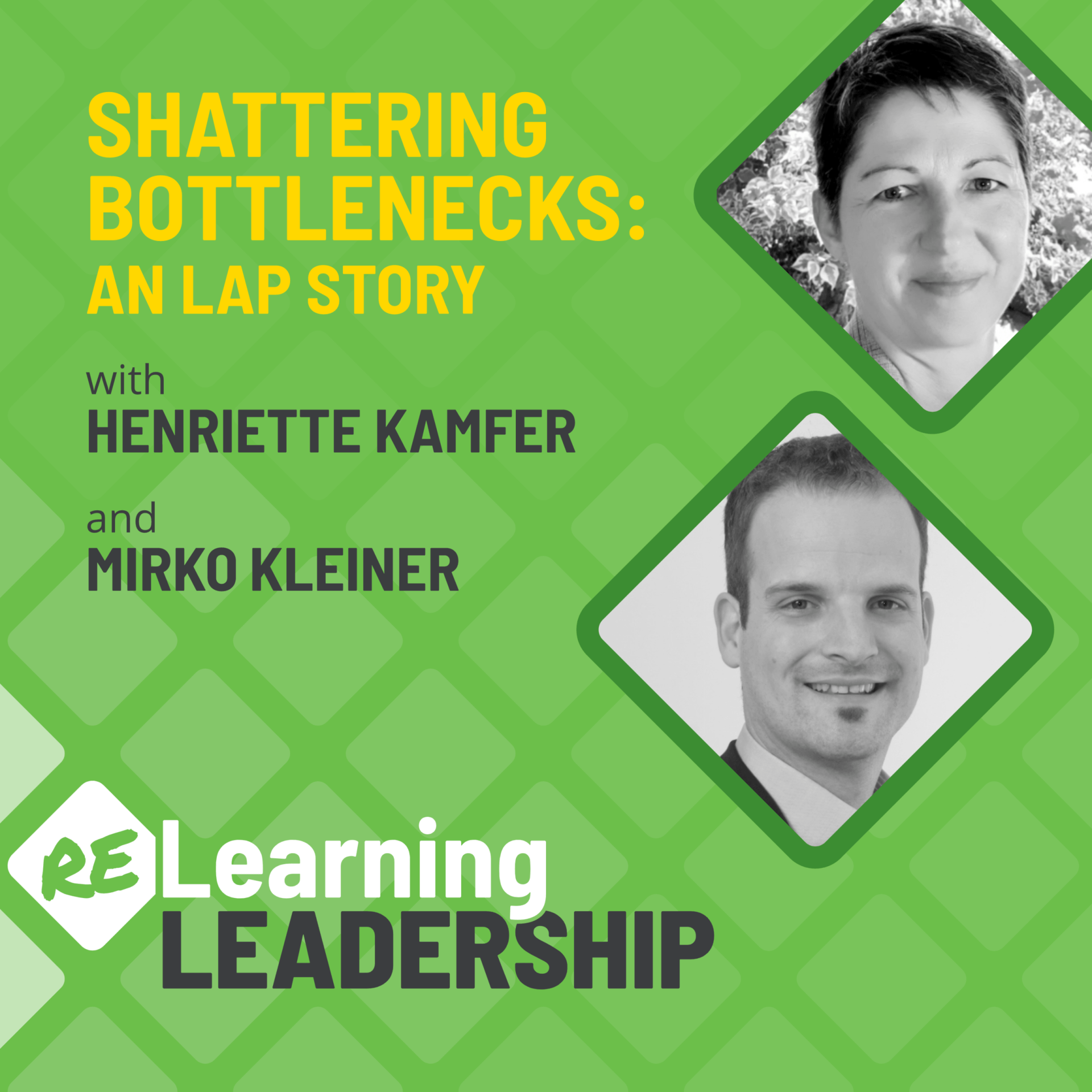
That story — and the fuller picture of what they built — is explored in a Relearning Leadership podcast episode, "Shattering Bottlenecks: A Lean-Agile Procurement Story", with Henriette, Mirko Kleiner, and ALJ founder Pete Behrens.
Measure What You Actually Want
If procurement teams are evaluated primarily on cost savings and risk avoidance — with no metrics tied to speed or time-to-value — they will rationally prioritize thoroughness over urgency. That's not a character flaw; it's a logical response to the incentives in place.
Leaders who want procurement to move differently need to signal that through what they measure and reward, not just through what they ask for. Tracking how long it takes to move from procurement decision to realized value — alongside traditional savings targets — changes what the function optimizes for. It also reframes governance: rather than a checkpoint applied at the end of a process, governance becomes a design principle built into the front end. That's the shift from compliance as a brake to compliance as a guardrail.
Procurement Friction Is a Leadership Problem
The leaders who have made real progress here haven't reorganized a function or rolled out a new tool. They changed how they thought about where decisions belong, who owns outcomes, and what accountability looks like across organizational boundaries — including with external providers.
Most organizations treat procurement friction as a design problem. Tweak the process, add more tools, restructure the function. But underneath the design problem is a courage problem. Someone has to decide that the cost of the current system exceeds the cost of changing it — and then be the person willing to change it
— Pete Behrens, Founder & CEO of Agile Leadership Journey
That decision carries real risk. If the redesign works, the system improves. If something goes wrong along the way, the person who changed it owns that too. Most leaders know this, which is why the system keeps accumulating layers instead of shedding them.
Compliance is a requirement; momentum is a competitive advantage. With the right leadership attention, they don't have to work against each other. It starts with asking honestly whether the systems around your teams are built to support delivery — or have simply accumulated over time without anyone deciding that's what they wanted.
Where to Start
Procurement friction is rarely one person's problem to fix. It sits at the intersection of functions, incentives, and decisions made across the organization over many years. But it doesn't change without someone deciding to move it forward. The questions below are worth bringing into a room with the people who share the problem.
The Questions Worth Asking in Your Own Organization
- Where do sourcing and onboarding timelines most often conflict with your delivery timelines?
- Do your third-party procurement providers have visibility into the business urgency behind each vendor relationship — or are they working without that context?
- When a capable vendor is stuck in your process, who owns that cost?
- How does your organization capture feedback from business sponsors and vendors on their procurement experience — and does it actually inform how the process evolves?
- Are your procurement teams measured in ways that reward speed to value — or only savings and risk avoidance?
- If your top three strategic partnerships were onboarded 60 days faster, what would the impact be on your year-end goals?
- Who in your organization has the authority — and the willingness — to redesign the process rather than add to it?
Your experience belongs in this research.
ALJ is a co-sponsor of the 2026 State of Agility in Procurement & Supply study — the first global benchmark connecting AI adoption, organizational agility, and procurement. Takes 10–15 minutes.

Our partners at the LAP Alliance have written extensively on this topic. Mirko Kleiner's post, Breaking Down the Silos – Why Agile Delivery Gets Stuck at Procurement, goes deep on the operating model shift, and Boost Your SAFe Implementation with Lean-Agile Procurement explores what a scaled implementation looks like in practice.
Frequently Asked Questions
What is procurement in business?
Procurement is the process by which an organization sources, evaluates, contracts, and onboards external vendors, suppliers, and partners. It covers everything from identifying potential providers and managing competitive bids to negotiating contracts, verifying compliance, and managing ongoing supplier relationships. In large organizations, procurement is often governed by formal policies, dedicated teams, and — increasingly — third-party providers who manage parts of the process on the organization's behalf.
What is vendor onboarding?
Vendor onboarding is the process of formally qualifying, approving, and integrating a new supplier or service provider into an organization's systems and operations. It typically includes compliance verification, risk assessment, contract execution, and system setup. In large organizations, onboarding can involve multiple internal functions and third-party review processes, and can take significantly longer than the business relationship it's meant to enable.
Why do large organizations outsource procurement management?
Large organizations outsource procurement functions — including vendor tracking, compliance audits, supplier assessment, and risk scoring — to manage scale and reduce internal overhead. Third-party providers apply consistent standards across many vendor relationships simultaneously. The trade-off is distance from the business context that makes any specific vendor relationship time-sensitive or strategically important.
What causes vendor onboarding to take so long?
Vendor onboarding delays typically stem from multi-step compliance requirements, sequential review processes, and third-party providers who apply standardized timelines regardless of business urgency. Treating a strategic AI partnership the same as a commodity purchase compounds the problem. Each layer of review adds wait time, and when any step requires resubmission, the process stalls further.
Why do procurement functions keep adding review layers instead of simplifying?
Because the incentives favor caution. Nobody gets fired for adding a compliance check, but the leader who streamlines a process and something subsequently goes wrong faces real consequences. The result is a system that accumulates caution over time — rational at the individual level, costly at the organizational level. Changing it requires a leader willing to explicitly authorize a different approach and accept accountability for the outcome.
How does slow procurement affect AI and digital transformation?
The window for an AI pilot doesn't wait for an eight-month onboarding process. AI and digital initiatives depend on new vendor relationships — technology providers, implementation partners, and data vendors — that need to be contracted and onboarded quickly. When sourcing cycles run in months but delivery teams work in weeks, organizations lose the ability to act on insights, scale pilots, and capture value from investments already made.
What is a procurement platform team?
A procurement platform team is an evolution of the traditional procurement function in which procurement expertise is embedded as a shared capability rather than a centralized gatekeeper. Rather than processing requests on behalf of delivery teams, the platform team provides self-service tools, pre-approved contract templates, market intelligence, and coaching — enabling teams to handle routine sourcing independently within clear guidelines, while escalating complex decisions to specialists. The model is designed to scale compliance without scaling headcount.
What is the difference between outsourced procurement and embedded procurement capability?
Outsourced procurement transfers process management to a third-party provider who operates independently of the business. Embedded procurement capability means procurement expertise is integrated into delivery teams, with clear guidelines for what teams can decide independently and when specialist review is needed. The latter is faster and more attuned to what the business actually needs, while still maintaining compliance and risk management.
How can leaders reduce procurement bottlenecks without increasing compliance risk?
Leaders can reduce bottlenecks by differentiating procurement paths based on strategic importance — designating priority and authorizing speed for high-impact initiatives while standard purchases follow normal process. Equally important is measuring procurement on how quickly decisions translate to realized value, alongside traditional savings metrics. This shifts governance from a checkpoint at the end of the process to a guardrail built in from the start — maintaining oversight without creating the queue.