
Ebook | Technology Innovations: Learning From the Past and Exploring the Future With AI
Ready or not, AI is here.
To survive, we must take advantage of the new opportunities offered by generative AI, but we must also prepare for the threats from competitors and bad actors.
Over the past 25 years, Pete Behrens and Jim Highsmith have seen trends come and go – and they have witnessed first-hand several of the most impactful technology transformations our society has experienced. So what have they learned from these endeavors that we can apply to the emergence of AI?
Part history lesson, part cautionary tale, this ebook explores the key accomplishments and disappointments that have marked each wave of tech innovation.
Continue reading or complete the form below to receive a copy of the ebook delivered to your inbox.
Download the Ebook
Enter your name and email address to receive a copy of the ebook in your inbox.
Technology Innovations Ebook
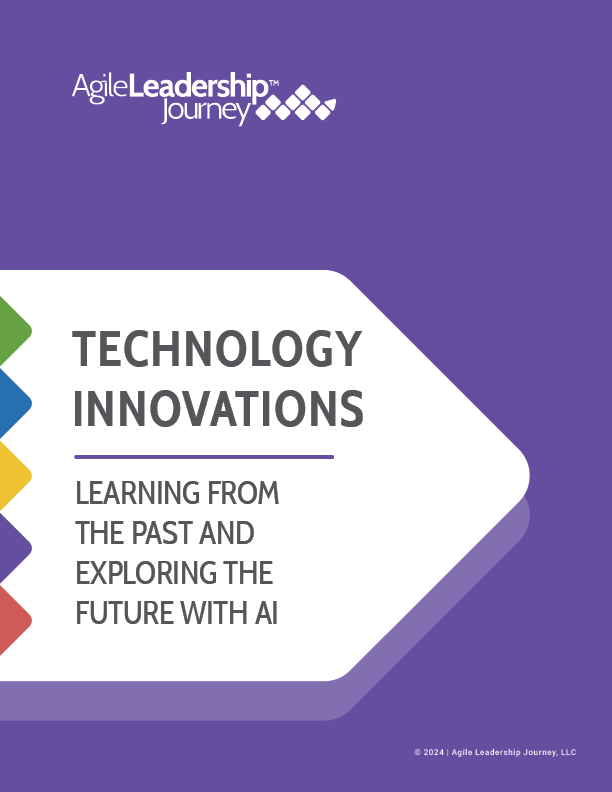
Chapter 1: Lean Manufacturing Transformation
In the latter half of the 20th century, a transformative wave began to reshape the landscape of manufacturing. This era heralded the emergence of Empowered Operations, a concept that fundamentally diverged from traditional management practices, imbuing the manufacturing process with a new philosophy of leadership and operational efficiency.
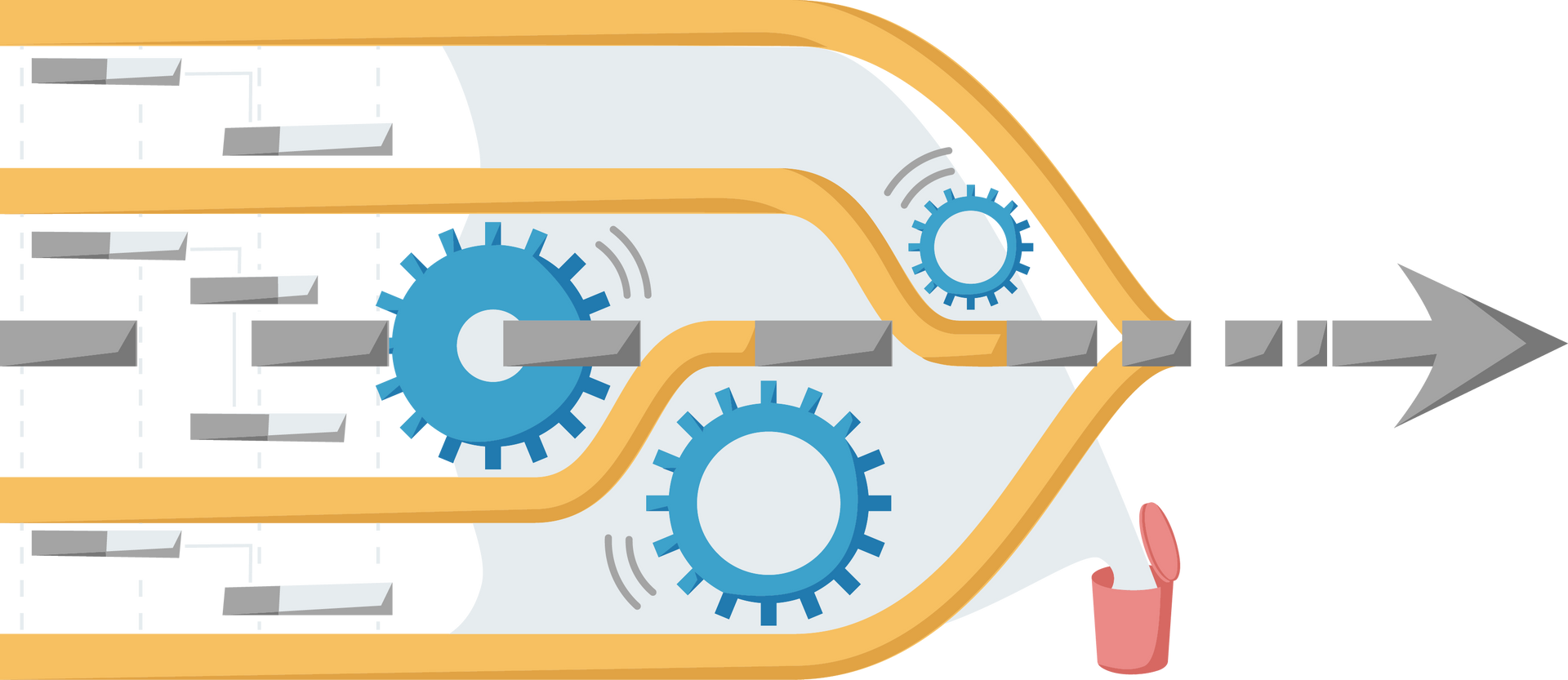
At the heart of this transformation was a commitment to leveraging the collective intelligence and creativity of the workforce, a stark contrast to the then-dominant paradigms of command and control.
Edward Deming, an American statistician renowned for his work in quality management, played an instrumental role in this shift. Invited by Toyota to help address quality issues that were hindering the company’s growth, Deming introduced principles that would become the bedrock of the Toyota Production System (TPS)—the precursor to Lean manufacturing.
Under Deming’s guidance, Toyota not only surmounted its quality challenges but also set a new standard for manufacturing excellence worldwide. The company’s journey from a struggling manufacturer to a global emblem of quality and efficiency exemplifies the transformative potential of this new approach.
Despite Toyota’s willingness to share its innovations with the world, many organizations struggled for decades to replicate its success. While they focused on the tangible aspects of Toyota’s system—tools, techniques, and procedures—they failed to embrace their core leadership mindset and culture of trust and empowerment toward a relentless pursuit of quality that defined the company’s ethos.
This oversight underscores a critical lesson: the essence of Lean manufacturing and the power of The Toyota Way lie not in their processes but in the mindset and culture that supported it.
Chapter 2: Agile Software Transformation
At the dawn of the 21st century, another seismic shift began to reshape the world of software development. This transformation was catalyzed by a small group of forward- thinking individuals, disillusioned with the prevailing project management methodologies that had long dominated the industry.
Together, they redefined the very essence of how software was developed and delivered.
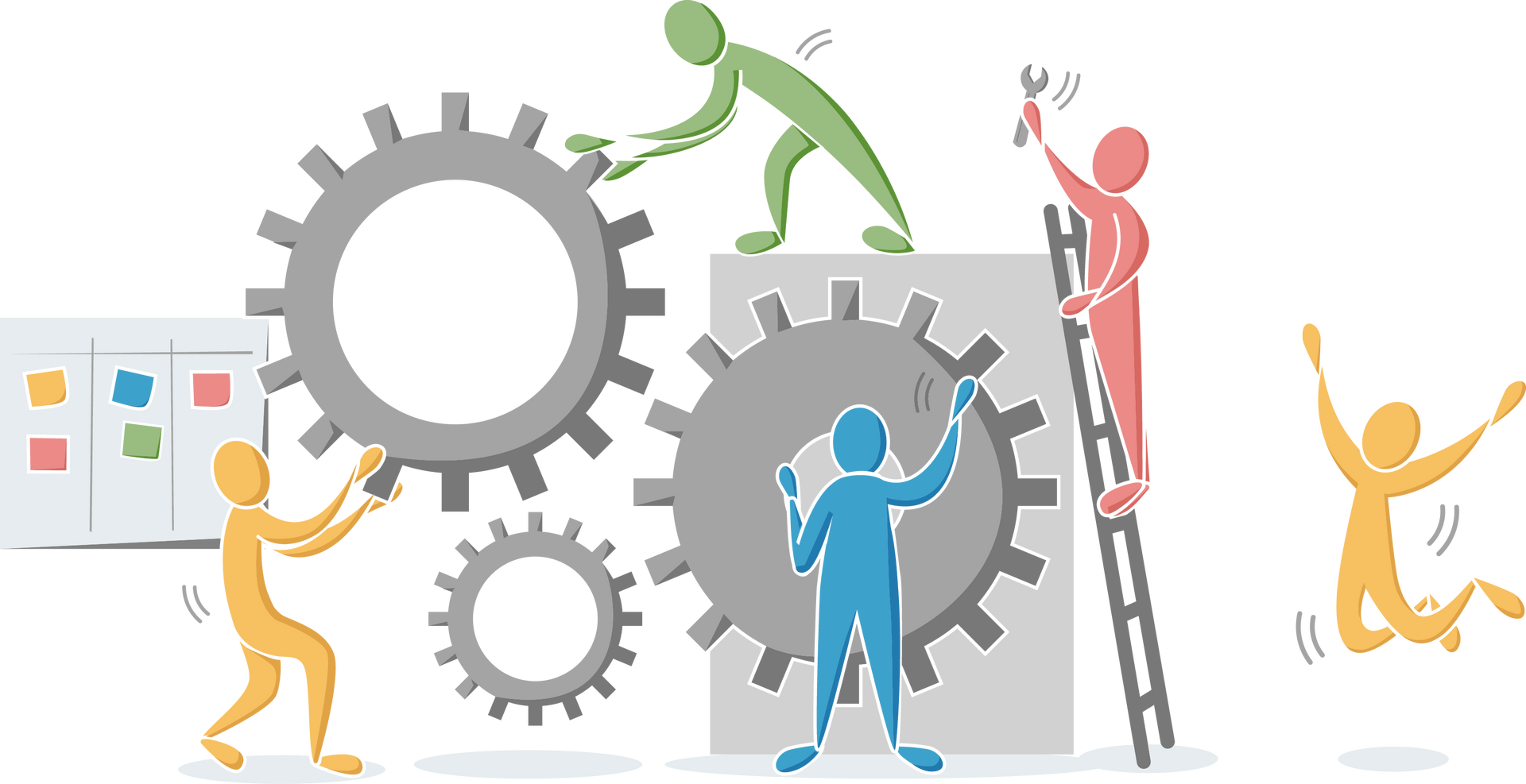
This collective, known today as the pioneers of the Agile movement, introduced a radical departure from traditional software development processes, championing iterative and incremental approaches that emphasized flexibility, collaboration, and customer satisfaction above all.
The early successes of companies like Salesforce and Spotify became legendary. These companies did not merely adopt Agile practices; they embodied the Agile mindset, creating cultures that thrived on rapid adaptation, continuous improvement, and a deep, unwavering focus on delivering value to customers. Their achievements were not the result of rigidly applying a set of processes but rather the natural outcome of cultivating environments that embraced change, encouraged experimentation, and celebrated failure as a pathway to innovation.
However, as the allure of Agile’s successes spread, many organizations attempted to emulate these trailblazers, often with limited success. The mistake was a fundamental misunderstanding of the Agile movement’s core tenets. Instead of focusing on the transformation of organizational culture and mindset, these imitators fixated on the superficial aspects of Agile methodologies— adopting the agile and scaling frameworks— without embracing the underlying principles and mindsets that made agility truly transformative.
They overlooked the fact that agile is about people—empowering teams, fostering collaboration across departments, and creating an organizational ethos where continuous learning and customer feedback are integral to development processes.
It’s hard to blame organizational leaders, as the word “agile” has been co-opted and diluted to the point of losing its original meaning. The Agile Manifesto’s call for collaboration, customer focus, and flexibility in development has, according to some, been overshadowed by a focus on selling Agile as a service or product, turning it into a buzzword rather than a transformative methodology.
Jim Highsmith, along with other leaders in the Agile community, is actively involved in taking back the word “agile” based on its original definition through their Reimagining Agile initiative. This effort is about acknowledging the historical intent of Agile, learning from organizations where agility has flourished, and promoting an understanding of what contributes to its success.
This failure to grasp the essence of Agile—its spirit, cultural underpinnings, and emphasis on mindset over methodology—is leading some to declare their agile transformations a failure. Yet, this misstep offers a critical lesson: The power of agility lies not in the processes and tools but in the ability to foster an environment where innovation flourishes, teams are more responsive to customer needs, and work becomes a collaborative journey of discovery.
Through a series of early 2024 articles at Forbes.com, Steve Denning makes the case that the top 20% of companies—Google, Microsoft, Apple, Nvidia, and others—have a management style that is largely based on agile principles, even as they don’t reference agile as a term. Pete Behrens has spoken openly about how these companies have developed their own agile-like recipes based on a mindset and culture as opposed to following popularized agile frameworks.
Chapter 3: Data-Driven Transformation
The evolution of organizations into data-driven entities represents the latest paradigm shift in the technology landscape, echoing the transformative journeys of the Lean and Agile movements before it.

Just as Toyota redefined manufacturing with its Lean principles and companies like Salesforce and Spotify illustrated the power of agility in software development, the rise of data-driven organizations has showcased the transformative potential of leveraging big data and analytics to inform decision-making and drive business strategy. Yet, similar to its predecessors, the path to becoming truly data-driven is fraught with challenges, and not all who attempt the journey reach their destination.
In the data-driven world, two stalwarts stand out: Netflix and Amazon. Netflix stands as a paragon of a data-driven organization, leveraging vast amounts of user data to inform content creation, recommendations, and strategic decisions. Its ability to analyze viewing habits and preferences has not only transformed its content delivery model but has also led to the production of highly successful original content. Netflix’s success story underscores the power of data in understanding customer needs and preferences, allowing for a highly personalized and engaging user experience.
Amazon’s rise to e-commerce dominance is a testament to its data-driven approach. From personalized product recommendations to optimizing logistics and supply chain management, Amazon uses data analytics to enhance every facet of its business–all while setting new standards in customer service, efficiency, and business innovation.
However, as many organizations rush to emulate these success stories, they encounter a familiar set of challenges. The allure of big data and analytics tools can lead companies to neglect the cultural and organizational shifts required. Similar to the Agile and Lean transformations, the essence of becoming a data-driven organization lies not in the adoption of tools and platforms but in cultivating a culture where data-informed decision-making is embedded in the DNA of the organization.
At Netflix, underpinning their data-driven capability is a culture of freedom and responsibility as illustrated in the books about Netflix culture by CEO Reed Hastings and Chief Talent Office Patty McCord. These books detail the company’s approach to leadership, the practices that encourage innovation and creativity, and how it fosters a culture of reinvention to maintain its position as a leader in the digital entertainment industry.
Yet, even with these words of wisdom broadly accessible, among major companies today there is nearly universal acceptance that data-driven management is strongly preferable to the alternatives.
While almost 99% of organizations report that they are investing in data initiatives, only one- third report having created a data- driven organization. And despite the growing consensus and investment levels, only half of organizations—exactly 50%—reported that they are managing data as a business asset.
The advent of big-data solutions and the next generation of data management capabilities— Hadoop, data lakes, DataOps, and modern data architectures—have been helpful but have not assured successful business adoption or outcomes. Technology does not appear to be a barrier or problem. Only 9.1% of executives point to technology as the principal challenge to becoming data-driven. In fact, cultural factors—people and process issues—were cited by 90% of executives as the principal obstacle that they face. This statistic is supported in the book Fail Fast, Learn Faster by Randy Bean and Thomas H. Davenport:
What is the principal challenge to your organization becoming data-driven? There are only two possible responses: (1) people/ business process/culture and (2) technology. In the most recent 2021 survey, 92% of these well-paid and smart people in big companies pointed the finger at people/process/culture, and only 8% believed the problem was technology. The numbers in the previous four years in which he asked the question on the survey were approximately the same.
Many companies struggle with siloed data, inadequate data governance, and a lack of data literacy across the organization. Without a foundational understanding of how to interpret and act on data insights, organizations can find themselves drowning in data but starved of actionable intelligence.
Moreover, the transition to a data-driven culture requires a shift in mindset—from gut- driven to data-informed decisions—which can be a significant hurdle in organizations entrenched in traditional decision-making paradigms. The story of the data-driven movement is one of transformative potential mixed with cautionary tales of missteps and challenges.
Just as Toyota and early Agile adopters showcased the benefits of Lean manufacturing and Agile methodologies, pioneers like Netflix and Amazon demonstrate the competitive advantage that a data-driven approach can offer. Yet, the path to success is nuanced and requires more than just technological adoption. It demands a holistic transformation that encompasses culture and mindset.
Chapter 4: Generative AI Transformation
That brings us to today, at the threshold of the next technology revolution–generative AI. Will it be
Bill Murray’s version of
Groundhog Day or a new start? Will we repeat the errors of our past or learn from them?
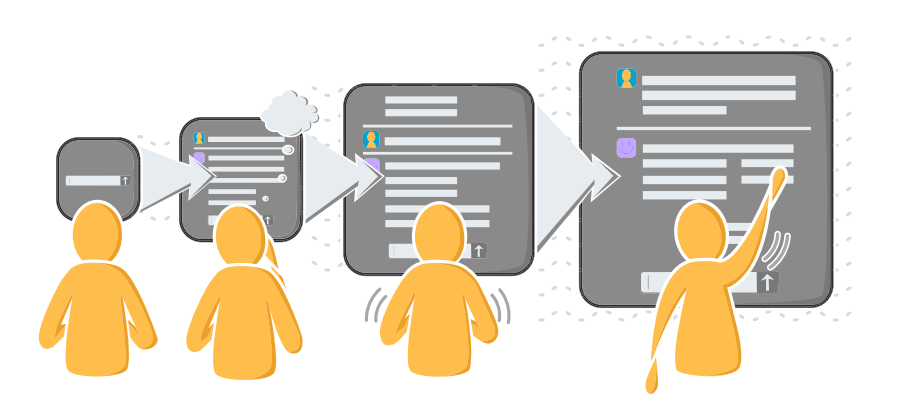
Imagine waking up to the same song on the clock radio each morning (Sonny and Cher’s “I Got You Babe” for those seeking to remember), with the slow realization that we’re living the same day over and over.
Over the past few days (in our case, decades), we’ve awoken to a repeated song of technology transformation, promising success through a new approach using technology, processes, frameworks, and tools. Yet each day we end with the realization that it was the same as the day before–a failure to gain the true value from our efforts.
Technologies will continue to come and go, with another new one knocking on our door as we speak. So what, as leaders, are we going to do about it? Certainly, we can (and will) embrace it. However, the history of technology transformations teaches us that the key to success lies not in the technologies themselves but in how we integrate these tools within the cultural and operational fabric of our organizations.
For Lean manufacturing, we learned the importance of empowering the knowledge worker alongside the assembly plant technology and process changes they worked within. Similarly, generative AI will continue to shift away from traditional specialization and hierarchy toward more distributed and iterative decision-making, where AI tools are used to enhance and not replace human judgment. Leaders unwilling or unable to foster such cultures will be left wondering why their AI investments were underwhelming.
For Agile software development, the line between accomplishment and disappointment through more agile ways of working might be boiled down to the first statement of the Agile Manifesto which emphasized people over process. Through generative AI, the humanness of organizations has never been more threatened and thus never been as important. While forgetting or even pushing aside humans amid the explosion of generative AI tools is alluring, to be truly transformational, leaders would be wise not to sacrifice human creativity and spirit.
And for data-driven transformations, we learned that data alone, isolated from the organization and the culture that is capable of leveraging that data, is bound for disappointment. Just as data-driven transformations showed the necessity of embedding a data-centric mindset into every layer of an organization, generative AI demands a pervasive acceptance and understanding of AI capabilities across all departments. Where does this leave us with generative AI at our doorstep?
Act Now
Through the three technology transformations outlined above, the timeline of change is escalating. The Lean transformation occurred across 60 years, the Agile transformation was about 30 years, and the data-driven transformation is only about 15 years old. The only thing not likely to change is the acceleration of change itself. And so while AI technology can be traced back 30 years, the clock really started in 2023 with the introduction of ChatGPT 3.5. By the end of the decade, it will have washed through every aspect of business.
Curate Creativity
Generative AI is lowering the cost of creativity and democratizing data science, where anyone in the organization, regardless of competency, can play a critical role in discovery and value creation. Encouraging a culture that views generative AI as a tool for enhancing human creativity rather than replacing it can help in harnessing the full potential of AI. This involves fostering an environment where innovative uses of AI are rewarded and shared across the organization.
Invest in People
Just as previous transformations required new skills and adaptation to new roles, generative AI will require significant investment in training and development to ensure that all employees can work effectively with AI technologies.
The winners in the next technology transformation will find the creative intersections between humans and technology. The future is hybrid.
To avoid a Groundhog Day of technology transformations, where new technologies are introduced without the requisite changes in mindset and culture, leaders must proactively shape the organizational ethos to embrace these advanced tools. This involves not just adopting new technologies but also adapting our organizational structures, processes, and, most importantly, our mindsets to fully leverage the potential of generative AI.