Clear Skies, Stormy Weather, and the Fog in Between: A New Way to Think About Leadership
Key Insights
Most leadership thinking prepares people for two conditions: stable environments where you plan and optimize, and crises where you act fast and decisively. But the terrain most leaders are actually living in — uncertain, unsettled, no clear path forward — is neither. Pete Behrens calls this the fog, and in a recent interview argues it has become the permanent landscape of leadership. The leaders who navigate it best aren't the ones who speed up or freeze — they're the ones who slow down deliberately, build the internal self-awareness to recognize their own blind spots, and treat development not as a program to complete but as an operating system that runs continuously.
Most Leadership Training Prepares You for Weather That No Longer Exists
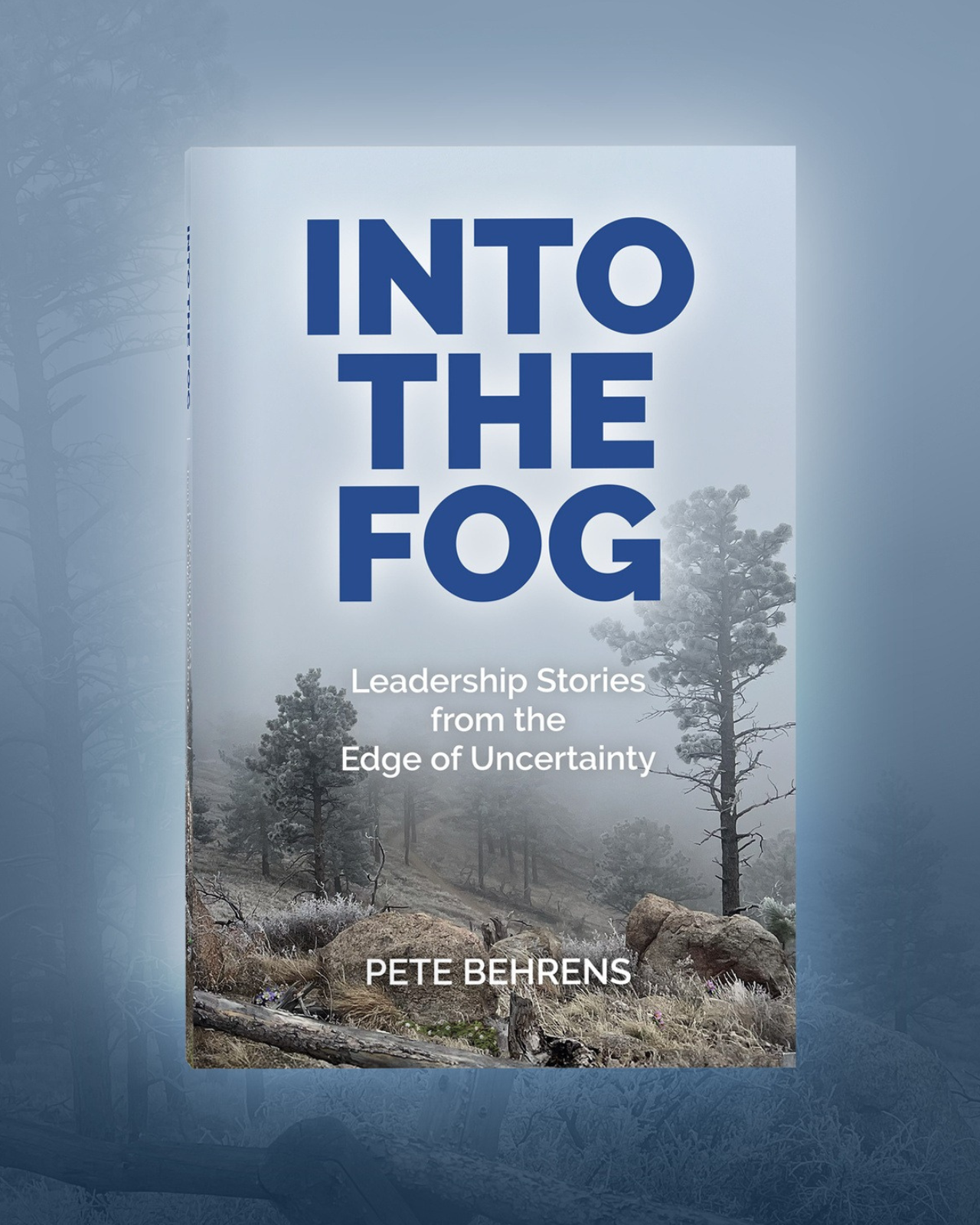
Pete Behrens, founder and CEO of Agile Leadership Journey and author of Into the Fog, recently joined Business RadioX's High Velocity Radio for a conversation with host Lee Kantor that reframes something most leaders think they already understand: what it actually means to lead through uncertainty.
Three Terrains. Most Leaders Are Only Trained for Two.
Pete opens the conversation with a deceptively simple model. Leaders operate in one of three terrains.
Clear skies is stability — set a plan, execute, optimize. Most leadership development was built for this.
Stormy weather is crisis — decisive, fast action is required. Leaders are trained for this too, even if imperfectly.
Then there's the fog — the terrain in between, where the path isn't obvious, there's no immediate emergency, but nothing feels settled. No clear data. No obvious next move. This is where Pete argues most leaders are spending most of their time today — and where most of them are least equipped.
"The concept of clear skies is almost negligible in today's business environment," he says. "The fog is becoming the landscape of leadership."
The Instinct That Makes It Worse
The natural response to fog is to either freeze or accelerate. Pete suggests a third option, drawn from the most ordinary of experiences.
"Think about what we do best when driving in fog. We slow down. Not stop — that won't achieve our goals. And not speed up, which is the natural instinct. Slowing down creates the clarity that's most scarce in uncertainty."
That reframe — treating fog not as a defect to fix but as an environment to navigate — changes what leadership requires. Observation over reaction. Movement that generates feedback rather than movement that assumes a destination. And enough patience to let clarity emerge from action rather than waiting for it to arrive before acting.
The Fog Between Your Ears
There's an external fog — markets shift, competitors move, disruptions compound. But Pete makes a point in the interview that tends to land hardest with leaders who hear it: the most dangerous fog isn't external. It's internal.
"The most dangerous fog happens between our ears. It's the ego, the assumptions, the biases, the blind spots we have as leaders — that lack of self-awareness that impacts all of us."
Organizations, he argues, mirror their leaders. If something feels off in the
culture, in team dynamics, or in execution, the source is often closer than leaders want to look. The willingness to hold up that mirror — and act on what it shows — is where real leadership development begins.
Development Isn't a Program. It's an Operating System.
One of the most practically useful ideas in the interview is how Pete reframes leadership development itself. It isn't something you do once and move on from. It's an operating system — something that has to run continuously, inspecting and adapting in an ongoing cycle.
"This is not a one-time mode. Think about this as your operating system, not a one-time event. The inspect and adapt can't happen a single time. It has to happen over and over."
The leaders who build genuine resilience aren't the ones who had a breakthrough and moved on. They're the ones who built the habit — repeatedly, across every level of the organization.
Hear the Full Conversation
This summary captures some of the highlights, but the interview goes deeper — including Pete's thinking on why movement creates clarity, what self-awareness actually requires of leaders, and how to know when your organization is signaling a problem before the data shows it.
If these ideas connect with challenges you're navigating in your own organization, we'd welcome the conversation. And for more stories from leaders working through exactly this terrain, Pete's book Into the Fog is a good place to start.