
Beyond Compromise: What Mary Parker Follett Taught Us About Conflict, Difference, and the Art of Integration
ARTICLE HIGHLIGHTS
Most leaders are trained — implicitly or explicitly — to resolve conflict as quickly as possible, defaulting to compromise as the reasonable middle ground. But management pioneer Mary Parker Follett argued a century ago that compromise leaves the real issue unresolved, because it operates at the level of what people say they want rather than what they actually need. The leaders who generate the most creative, durable outcomes are the ones who resist the pull toward quick resolution and instead pursue integration — a harder, more courageous approach that treats difference not as a problem to manage but as a source of insight to unlock.
A Thinker Ahead of Her Time
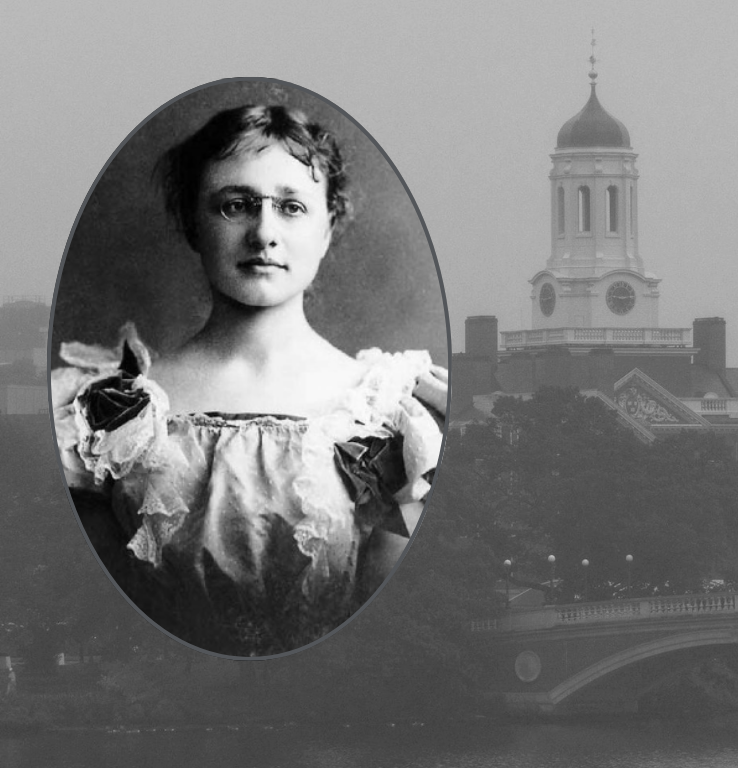
In the bustling streets of early 20th-century Boston, where intellectual fervor met rigid social norms, Mary Parker Follett navigated a world that was often unready for her progressive ideas. Born in 1868 into an era where women's voices in academia and management were seldom given any chance to be heard, Follett's journey was not just about her own aspirations but a testament to her unyielding belief in the power of collective wisdom and more democratic leadership.
Living just a stone's throw from Harvard*, Follett faced the impenetrable barriers of gender norms. Harvard, a bastion of higher education and intellectual discourse, was an exclusive domain for men. This, however, did not deter her. With the city as her classroom and its diverse inhabitants as her teachers, she immersed herself in the world of ideas and management practices. Her days were often spent in the shadows of Harvard's libraries and lecture halls, engaging in discussions with peers who had access to spaces she did not. These interactions — informal, rich in intellectual exchange — sparked in Follett a desire to challenge the prevailing assumptions about organizational management and societal leadership.
Her professional career began as a social worker in Roxbury, where she established community centers and grappled with the real-world complexity of human conflict and cooperation. She went on to write extensively — The Speaker of the House of Representatives (1896), The New State (1918), Creative Experience (1924) — and became a sought-after consultant and lecturer in the 1920s and 1930s, teaching at the London School of Economics and advising the U.S. President's Committee on Administrative Management. In a world dominated by power-over structures, Follett envisioned a different paradigm. She saw power-with as the essence of true leadership — a collaborative approach where power was not wielded over others but exercised with them through interaction and cooperation.
There is an irony worth noting in Follett's biography. One of the 20th century's most important thinkers about organizational power operated largely outside the organizations of her time. Her exclusion from formal structures may have sharpened her thinking rather than diminished it. She saw power dynamics with unusual clarity precisely because she observed them from the outside.
Her ideas were ahead of their time then. In today's complex, fast-moving, cross-functional organizations — where AI is accelerating decisions, teams span geographies and disciplines, and the pressure to move fast competes constantly with the need to get things right — they may be more necessary than ever.
Conflict Is Not the Problem. Our Response to It Is.
"Conflict is the appearance of difference, difference of opinions, of interests. For that kind of conflict I have no words but welcome."
— Mary Parker Follett
Most of us were taught — implicitly or explicitly — that conflict is something to resolve as quickly as possible. We push through it, smooth it over, find a middle ground, and move on. The assumption is that conflict signals something gone wrong: a failure of alignment, a breakdown in relationship, an obstacle to progress.
Follett challenged that assumption directly. Conflict, she argued, is not inherently negative. It is an inevitable expression of difference — and difference is not a problem to be eliminated. It is the raw material of better thinking.
When two people or two teams disagree, they are usually bringing genuinely different information, experiences, priorities, or needs to the same situation. That difference, handled well, is where some of an organization's greatest thinking happens. Suppressed, it doesn't disappear — it goes underground, emerging later as passive resistance, disengagement, or decisions that quietly fail to stick because the people implementing them never actually agreed.
Follett identified four responses to conflict, each reflecting a different relationship to power and difference.
SUBMISSION is the path of least resistance — one party yields without any real engagement with the underlying difference.
It avoids immediate friction but leaves the real issue unaddressed. Over time, submission breeds resentment and erodes trust. It is also a missed opportunity: the perspective that was surrendered might have contained exactly what the situation needed.
STRUGGLE TO WIN is the combative response — a zero-sum approach where one party's gain is the other's loss.
It may achieve short-term outcomes, but it does so at the expense of the relationship and the possibility of genuinely collaborative solutions. Leaders who default to this mode may win arguments while losing the people they need to execute on what they've decided.
COMPROMISE is the response most organizations celebrate as mature and pragmatic.
Each party makes concessions; both get something; the conflict is declared resolved. But Follett was skeptical of compromise, and her skepticism deserves to be taken seriously. Compromise operates at the level of what people say they want — their stated positions. It splits the difference between those positions. What it rarely does is ask why each party wants what they want — and what they actually need. When the underlying needs go unaddressed, the compromise holds on the surface while the real tension continues beneath it.
INTEGRATION is Follett's alternative — and it is the most demanding of the four.
Integration seeks a solution that fully meets the needs of all parties involved, not by splitting the difference but by uncovering what each party actually needs and finding a way to address both. This requires something that compromise does not: the willingness to ask harder questions, to sit with unresolved tension longer, and to resist the pull toward a quick resolution that feels like progress but isn't.
The Difference Between Positions and Interests
The distinction at the heart of integration is one that Follett articulated long before it became a cornerstone of modern negotiation theory: the difference between positions and interests.
A position is what someone says they want. An interest is why they want it — the underlying need, concern, or priority driving the stated demand. Compromise negotiates between positions. Integration asks about interests.
Follett illustrated this with an example that has since become one of the most cited in conflict resolution literature. Two people are arguing about a window — one wants it open, the other wants it closed. A compromise might leave it half open. But if you ask each person why they want what they want, a different picture emerges: one wants fresh air; the other wants to avoid a cold draft. Once the underlying interests are visible, a solution appears that neither party had considered — open a window in the adjacent room. Both interests are fully met. No one has to give anything up.
The power of this example is not in the window. It's in the question it requires: not "how do we split the difference?" but "what do you actually need, and why?" That question is harder to ask — and harder to sit with — because it slows down the resolution and introduces genuine uncertainty about where the conversation will go. Leaders who are trained to move fast, make decisions, and project confidence often find this the most counterintuitive part of Follett's thinking. The slowdown is the point. The uncertainty is where the better answer lives.
Why Integration Requires a Different Relationship to Power
Follett was clear that integration is not just a technique to apply in a difficult conversation. It requires a fundamentally different orientation toward power — what she called the shift from power-over to power-with.
A leader who relates to power as something to wield — who sees their role as directing others toward predetermined outcomes — will almost always default to domination or compromise when conflict arises. Domination because it's efficient. Compromise because it feels fair while preserving authority. Neither approach requires the leader to genuinely open themselves to the possibility that the other party's perspective might improve the outcome.
Power-with is different. It is not the abdication of authority — Follett was not arguing for endless consensus or the elimination of leadership judgment. It is the recognition that power generated through genuine collaboration — through the real engagement of diverse perspectives — produces better outcomes than power exercised over others. The leader who operates from power-with asks: how do we solve this together? What do you know that I don't? What are we missing by not fully hearing each other?
"Power-with is a jointly developed power, a co-active, not a coercive power."
— Mary Parker Follett
This orientation is precisely what makes integration possible. Without it, the conditions for a genuine integrative conversation don't exist. People will not surface their real interests — the underlying needs beneath the stated positions — if they don't believe those interests will be genuinely considered rather than managed or overridden.
This is also why Follett's thinking connects directly to
catalyst leadership. The shift from driving results through personal authority toward developing the people, culture, and conditions that make results possible is the same shift Follett was describing a century ago. Catalyst leaders don't just use integration as a conflict resolution technique. They create the organizational conditions in which integration becomes possible — where difference is treated as insight rather than friction, and where people feel safe enough to say what they actually need.
What Integration Actually Requires
Follett was honest that integration is harder than domination or compromise. It requires more of the leader and more of everyone involved. Several things have to be in place for it to work.
Genuine curiosity about the other party's interests.
This sounds obvious but is genuinely rare. It means asking not just "what do you want?" but "help me understand why — what's driving this for you?" And then actually listening to the answer rather than formulating a response while the other person is still talking.
Willingness to surface your own interests honestly.
Integration is not a technique for getting what you want while appearing collaborative. It requires both parties to articulate what they actually need, which means being honest about underlying concerns, priorities, and constraints that may not have been named yet. This vulnerability is often the hardest part.
Tolerance for unresolved tension.
Integration takes longer than compromise. The moment when a quick compromise becomes available — when there's a deal on the table that both parties could live with — is often the moment when integration is most needed and most tempting to abandon. Sitting in that tension, staying curious rather than closing down, is where the better solution eventually emerges.
Valuing difference as a source of insight.
Follett argued that diverse perspectives are not an obstacle to alignment — they are what makes genuine alignment possible. The goal is not to minimize difference but to engage it fully. An organization that has learned to treat disagreement as data — to ask what a dissenting voice knows that the room doesn't — is one that has built the conditions for integration into its culture.
Follett's Legacy: Resilience, Vision, and Enduring Relevance
Parker Follett's legacy is a narrative of resilience, intellect, and vision. Her ideas on democratic leadership, conflict resolution, and the power of collective endeavor were not only ahead of her time but remarkably relevant to the leadership challenges most organizations face today. Despite being confined by the rigid structures of her era, Follett broke through barriers with the strength of her ideas, leaving an indelible mark on the world of organizational theory and practice.
In the end, her story is not just about the struggles and triumphs of a woman in a male-dominated society. It is about the enduring power of ideas and the impact of a visionary mind that dared to challenge, rethink, and transform the way we understand leadership and organizations.
Agile Leadership Journey not only celebrates Follett's life and work but continues to carry her voice into the generations to come. While women have made many tremendous strides in the past century to equalize power in society and business, many of her key insights continue to confront all genders. Moving past traditional power-over struggles to power-with alignment and integration not only helps women to rise — it helps all of us and our organizations to rise.
To learn more, we encourage you to read a collection of her works in
The Essential Mary Parker Follett, edited by François Héon, Albie Davis, Jennifer Jones-Patulli, and Sébastien Damart.

Putting Integration Into Practice
"Integration involves invention, and the clever thing is to recognize this, and not to let one's thinking stay within the boundaries of two alternatives which are mutually exclusive."
— Mary Parker Follett
Understanding Follett's ideas is one thing. Applying them in the middle of a real disagreement — under time pressure, with real stakes, with people who may not share the same orientation — is another. A few starting points for leaders who want to move toward integration in their own teams and organizations:
Surface interests before negotiating positions.
Before any discussion of solutions, ask each party to articulate what they actually need — not what they want, but why they want it. Slow the conversation down enough for that question to get a real answer.
Name the conflict rather than managing it.
Follett's work suggests that suppressed conflict is not resolved conflict. When you notice real disagreement being smoothed over or avoided, naming it openly — and signaling that it's safe to engage with — is often the first step toward integration.
Treat dissent as data.
When someone in a meeting holds a different view, the integrative question is not "how do we get them to agree?" but "what do they know that the room doesn't?" Treating disagreement as information rather than resistance changes the dynamic of the conversation.
Resist the pull of a premature compromise.
When a deal that both parties can live with appears, pause before accepting it. Ask: does this address what each party actually needs, or just what they said they wanted? Sometimes the available compromise is the right answer. Often it's a signal that the real conversation hasn't happened yet.
Create the conditions — not just the conversation.
Integration doesn't happen in a single meeting. It happens in organizations that have built cultures of genuine dialogue, psychological safety, and the consistent message that difference is valued. That's the longer work — and it starts with how leaders show up in the smaller moments, long before the high-stakes conflict arrives.
Real-World Wisdom on INTEGRATION: Insights from LEADERS
While Mary Parker Follett’s principles provide an invaluable compass, translating them into modern corporate ecosystems introduces distinct, real-world challenges. During a Global Masterclass, the ALJ alumni community gathered to stress-test these concepts against the realities of modern leadership.
When pushing past a quick compromise to pursue true integration, our alumni highlighted four critical lessons from the field:
Ditch "Performative Inclusion"
In many organizations, leaders default to popular scripts like "disagree and commit." Alumni pointed out that this phrase is frequently weaponized to mask domination—a polite way of saying, "I’ve heard you, but I’m not changing my mind." When leadership actions are driven by hidden incentives (like short-term P&L targets) rather than shared values, teams quickly adapt with passive-aggressive compliance. True integration requires extreme leadership accountability, checking your ego, and ensuring alignment isn't just a performance.
Guard Against "Death by Debate":
ntegration is powerful, but it is resource-intensive. Alumni shared cautionary tales of grueling corporate mergers where trying to give every single decision a democratic, bottom-up voice resulted in months of exhausting meetings and severe decision fatigue. Catalyst leaders must have the situational awareness to know which high-stakes conflicts warrant integration, and when to step in with an "achiever" mindset to make a fast, operational call.
Embrace the "48-Hour Pause":
When a conflict is highly complex or emotionally charged, the urge to find a premature compromise just to relieve the tension is incredibly strong. One powerful practice shared by our alumni is intentionally declaring a 48-hour pause. By removing the immediate pressure of the clock, leaders give their teams the psychological breathing room to step away from defensive, reactive posturing and return to the table ready to uncover underlying interests.
Use Structured Frameworks to Neutralize Egos:
Moving a team from entrenched, positional arguments to cooperative invention requires practical tooling. Alumni highlighted Edward de Bono’s Six Thinking Hats as a game-changing framework during intense organizational friction. By structurally directing the entire room to look at a conflict through the exact same lens at the same time—whether analyzing raw data, exploring emotional risks, or brainstorming creative alternatives—leaders can separate the people from the problem and ensure dissenting voices are treated as valuable data.
The Catalyst’s Path Forward
Ultimately, Mary Parker Follett’s century-old vision reminds us that leadership is not about the eradication of friction, but the orchestration of collective wisdom. As our alumni community continually demonstrates on the ground, moving beyond the safety of a quick compromise takes immense courage, intentional tooling, and a relentless commitment to human-centric spaces. It requires us to slow down when the corporate world demands we speed up, and to treat dissent not as an obstacle to alignment, but as the very data required to achieve it. By stepping away from the zero-sum dynamics of "power-over" and leaning into the collaborative potential of "power-with," we do more than just solve today's operational conflicts—we build resilient, innovative cultures capable of navigating the complex transformations of tomorrow.
Ready to improve how you and your team navigate conflict, difference, and competing priorities?
Explore ALJ's foundational leadership program and learn more about catalyst leadership — the mindsets and behaviors that make integration possible.
*Harvard University officially opened its doors to women through the establishment of Radcliffe College, which was initially founded as the "Harvard Annex" in 1879. Radcliffe College was founded by Elizabeth Cary Agassiz and other women to provide women with the opportunity to receive higher education, especially since Harvard College did not admit women at that time. Radcliffe was formally chartered as a college in 1894 and functioned as a female coordinate institution to Harvard, where women could receive instruction from Harvard faculty. A few notable women who later attended Harvard, once open to women, were Hellen Keller, Margaret Mead, and Gertrude Stein.